Health and Safety Policy for Landscaping Highgate
 Landscaping Highgate requires a clear commitment to health and safety at every stage of work. This policy sets out the principles that guide safe practices across garden maintenance, turf care, planting, hard landscaping, pruning, and site clean-up. The aim is to protect workers, clients, visitors, and the public by reducing risks and promoting a consistent culture of care. Every task must be planned with safety in mind, from the first site check to the final tidy-up.
We believe that safe landscaping depends on preparation, supervision, and the right equipment. All staff must understand the hazards linked to manual handling, tools, machinery, slips, trips, falls, weather exposure, and the movement of materials. Risks should be assessed before work begins, and control measures must be applied without delay. This includes choosing suitable PPE, keeping work areas orderly, and using machinery only for its intended purpose.
 The company expects every person involved in landscape maintenance to take responsibility for safe conduct. Managers must make sure that employees are trained, briefed, and competent for the work they perform. Workers must follow instructions, report defects, and stop work if conditions become unsafe. Safety is not treated as a separate part of the job; it is an essential part of quality service and professional performance.
Core Safety Principles
The first principle is prevention. Before starting a project, the team should identify hazards such as uneven ground, hidden services, sharp objects, unstable structures, and plant-related irritants. A careful inspection supports safer planning and helps reduce avoidable incidents. The second principle is control. Tools, vehicles, and materials must be organised so that movement around the site is safe and efficient. The third principle is communication. Clear instructions, visible warnings, and prompt reporting help prevent confusion and reduce the chance of injury.Landscaping safety also depends on maintaining equipment properly. Blades, trimmers, saws, mowers, and powered tools must be checked before use and removed from service if faulty. Fuel, batteries, and charging systems need careful handling to avoid fire, leakage, or shock. Equipment should be stored securely when not in use, and only trained operatives may use specialist machinery. This helps protect both the team and anyone nearby.
Personal protective equipment is required where hazards cannot be eliminated by other means. Depending on the task, this may include gloves, eye protection, hearing protection, sturdy footwear, high-visibility clothing, dust masks, or weather-appropriate layers. PPE must fit correctly, be worn consistently, and be replaced when damaged. Health and safety in landscaping is improved when workers are equipped for the conditions they face.
Working Practices and Risk Control
 Manual handling is a frequent cause of strain in landscaping work. To reduce risk, heavy items should be moved using proper lifting techniques, mechanical aids, or team lifts where appropriate. Loads must be assessed for weight, shape, and route before being moved. Repetitive tasks should be varied where possible to prevent fatigue. Workers should be encouraged to stretch, take breaks, and speak up if a task feels unsafe or beyond their capability.
Weather can affect safety significantly. Wet surfaces increase slip risks, strong winds can make lifting and cutting more dangerous, and extreme heat or cold can affect concentration and stamina. The team must adjust working methods to suit the conditions, including pausing work during severe weather where necessary. Drinking water, rest periods, and suitable clothing help reduce the effects of temperature stress and support safer productivity.
Site housekeeping is another key part of the policy. Waste, cords, hoses, cuttings, and loose materials should not be left where they can create obstacles. Access routes must be kept clear for workers and emergency services. When using pesticides, fuels, or other substances, all containers should be labelled and handled in line with safe storage and use procedures. This careful approach supports both garden safety and environmental responsibility.
Training, Supervision, and Incident Response
Training is essential for maintaining high standards across all landscaping operations. Staff should receive induction training, task-specific instruction, and refresher updates when new equipment or methods are introduced. Supervisors must monitor work quality and safety performance, correcting unsafe behaviour quickly and ensuring that procedures are followed. Special attention should be given to inexperienced workers, who may need closer supervision until competence is proven.Any accident, near miss, or hazardous condition must be reported immediately. Early reporting allows the company to investigate the cause, apply corrective action, and prevent recurrence. First aid arrangements should be available on site or accessible without delay, depending on the scale and nature of the job. Emergency procedures must be understood by the team, including what to do in the event of injury, chemical exposure, fire, or equipment failure.
Landscape risk management is an ongoing process rather than a one-time check. Reviews should be carried out regularly and after significant changes in workload, site conditions, or equipment. Lessons learned from incidents and observations should be used to improve controls and strengthen future planning. This supports a safer workplace and encourages continuous improvement across all projects.
Responsibilities and Compliance
All employees are expected to cooperate with this policy and follow safe systems of work. They must not carry out tasks they are untrained for, use defective equipment, or ignore hazards that could lead to harm. Managers are responsible for ensuring that risk assessments are suitable, controls are practical, and work is supervised appropriately. The success of Landscaping Highgate depends on shared accountability and professional discipline.Clients and visitors should also be protected by clear boundaries, safe access arrangements, and visible warnings where needed. If work is being carried out near public areas, additional measures may be required to manage movement and prevent accidental contact with tools or materials. The aim is to ensure that each site remains orderly, controlled, and respectful of everyone present.
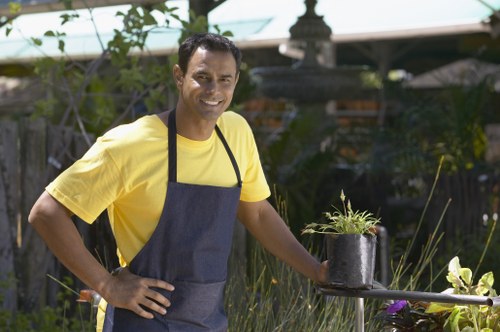 Our commitment to safe landscaping services means that health and safety is integrated into planning, delivery, and review. Standards will be maintained through training, monitoring, equipment checks, and prompt action on concerns. When everyone follows the policy, landscaping work can be completed efficiently while keeping risks as low as reasonably practicable.
 This policy applies to all landscaping activities and will be reviewed regularly to ensure it remains effective and current. It reflects our aim to create a safe, reliable, and professional working environment for every project, with health and safety treated as a core value rather than an added extra.